
Mourilyan Silica Project
Project
Mourilyan Silica Project
The project is a high-purity silica flour processing mine and facility and is located approximately 100km south-southeast of Cairns and 30km south of Innisfail.
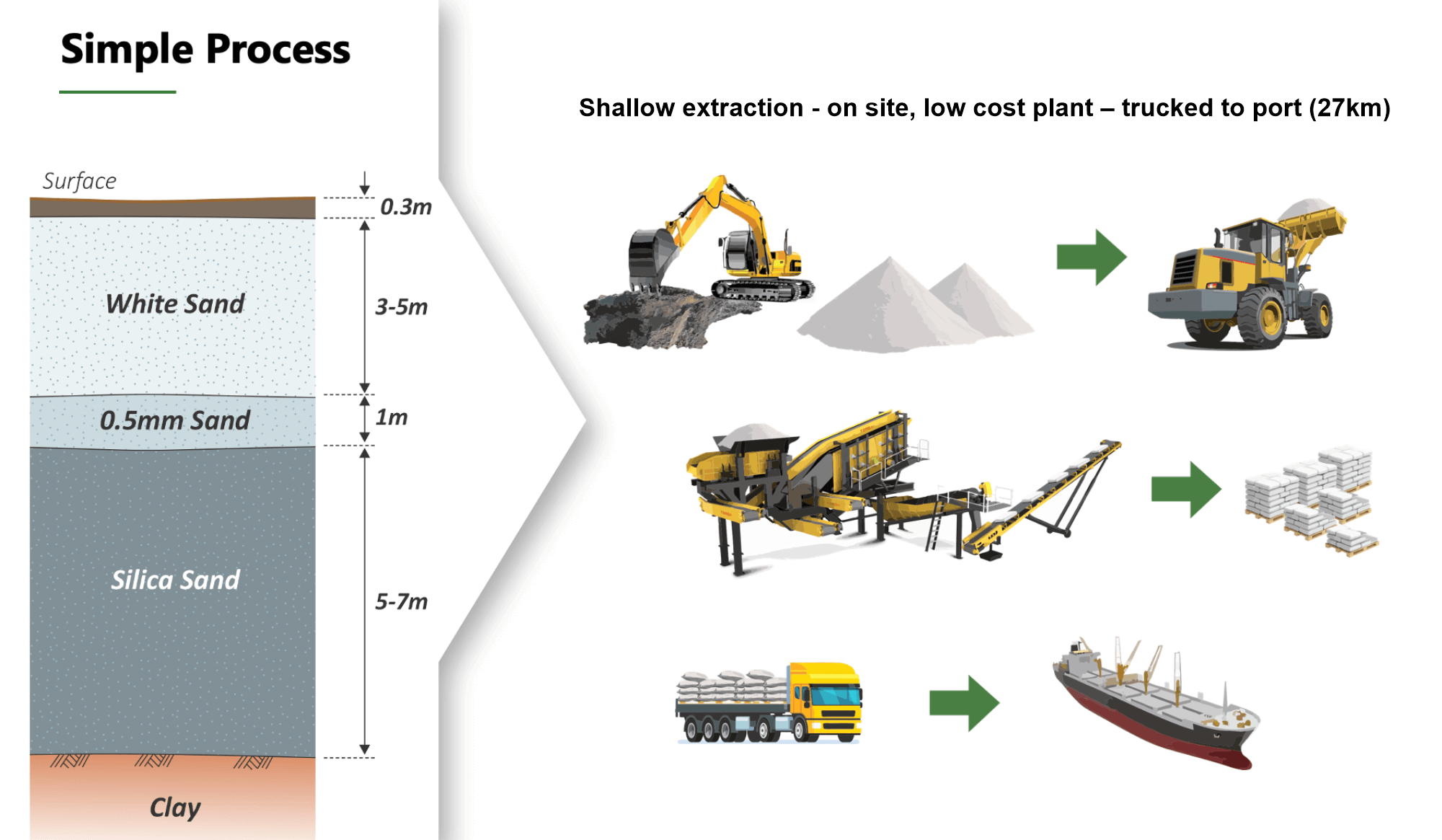
It is located in close proximity to major infrastructure, 5km from the Bruce Highway and 27km to the port of Mourilyan Harbour.
Mourilyan Silica Project is an advanced permitted project with existing Extractive Licence, Mining Lease and Mining Applications over the resource area along with existing environmental authorities and the resource has been identified as a high-grade ‘Critical Mineral’ by the Federal Government.
Project Details
Mourilyan Silica Project
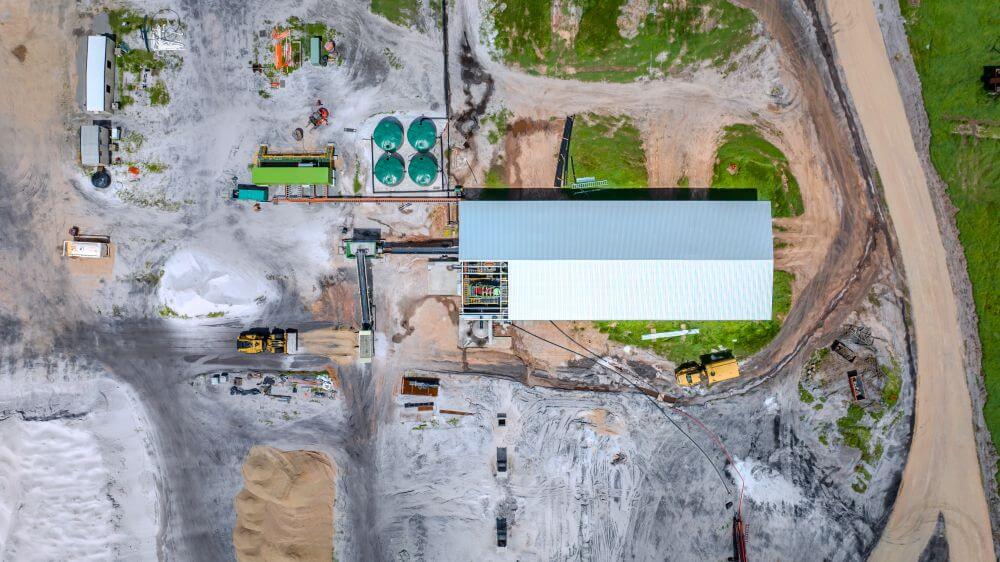
- Stage 1 will mine silica from a brownfield former quarry site and has a mining lease in place since 2003. The sand resource on the stage one property has been used for building and construction for over four decades. Stage one works have included building the processing plant on the freehold land, with the existing Mining Lease on Stephenson Road. The project processing plant was commissioned in April-May 2025.
- Stage 2 will encompass an expansion of the Stage 1 project and depth of the extraction; and will also involve an additional area located adjacent to Stage 1. In May 2026, SRA acquired the freehold land and exploration permit to the north-east of the original site. This additional freehold area, expands the stage 2 project area.
What is Silica used for?:
High Grade Silica Uses
What is high-grade silica flour used for?
The project will position Australia as a major exporter of silica flour to the Asia-Pacific Region including Japan, South Korea, China and the US.
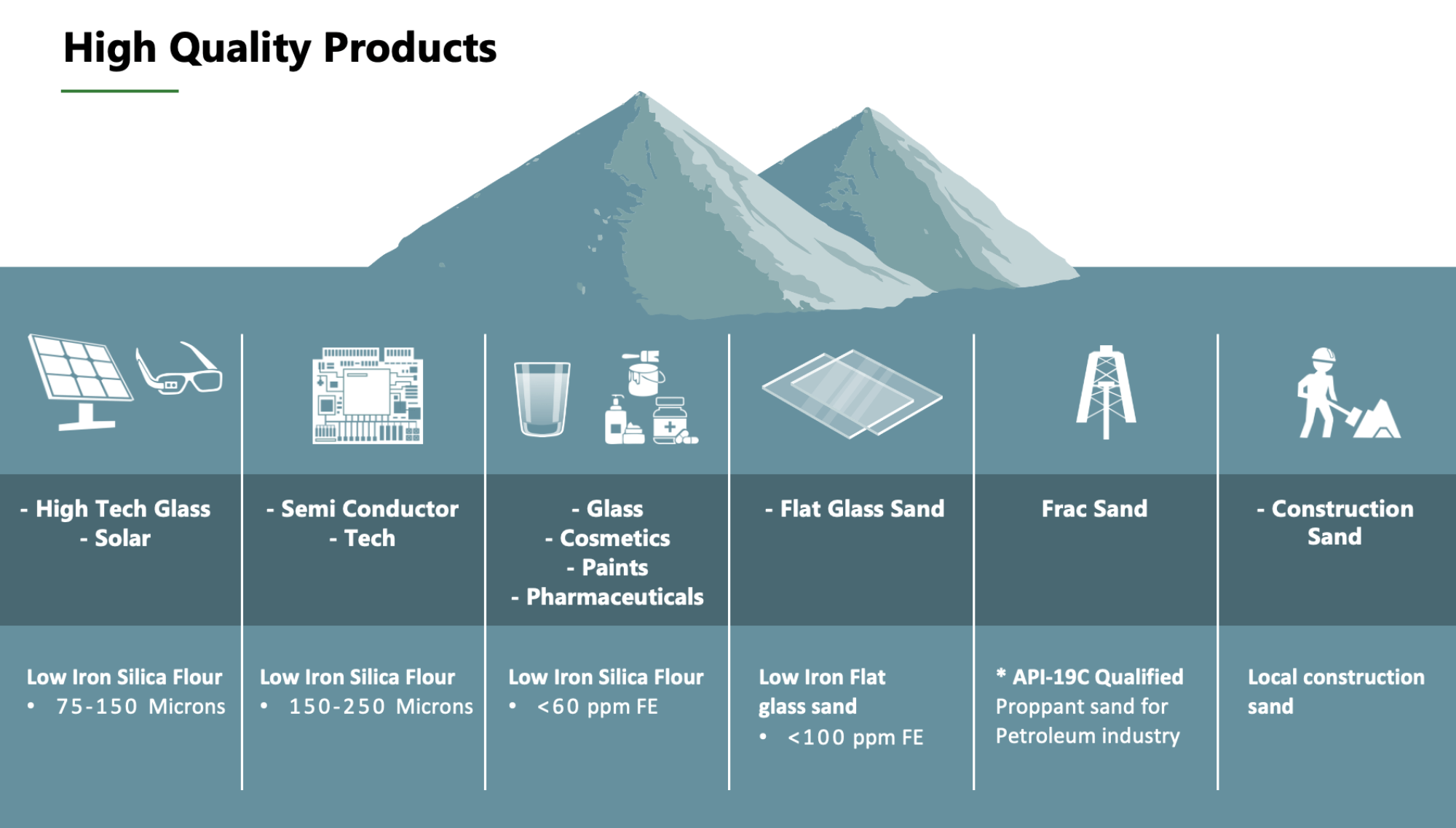
Silica flour is used in products to manufacture glass (including touch screens), solar panels, the automotive industry, defence industry and technology manufacturers.
The core products will be used to make solar wafers, ceramics, fibreglass, touch screens, solar panels, and high-grade glass coverings. Commercial by-products include foundry sand and construction sand, for the South East Asian, Australian and US markets.
Markets are looking for reliable and sustainable sources of silica from low-risk and trusted jurisdictions such as Australia.
Solar panels:
The global solar panel market is on course to add 493 GW Solar power in 2025, according to forecasts by Wood Mackenzie. Source: Starum Resources, Asia Pacific Silica Sand Target Market Segments Report, 2025.
This adds in to the total installed capacity of solar electricity generation which is projected to reach 5970 GW in 2025. Source: wyhsyolar.com.au, accessed 10/09/25, State of the Solar Industry in Australia – 2025 Industry Report.
Thin Film Transistor Glass (TFT):
TFT glass is used for the displays on LED, LCD & OLED screens. These include mobile phones, wearables, monitors and televisions. As the technology behind the equipment improves, the standard of glass needs to be top quality. Silica is a priority ingredient in the glass manufacturing for these screens and with the display technology market increasing, high quality silica will be in further demand. Source: Stratum Resources, Asia Pacific Silica Sand Target Market Segments Report, 2025
TFT Silica is also used in the manufacture of semiconductors, specifically in China & Asia. As the global population demands improved technology, the requirements for semiconductors and TFT glass will continue to grow. Source: https://www.marketresearchfuture.com/reports/thin-film-transistor-market-42872, viewed 10/09/2025.
3D Printing:
This emerging market requires silica sand to contribute to manufacturing moulds and tooling. The remarkable properties of silica sand contribute to strength of the end products. It is water soluble and is becoming the preferred choice for the automotive and aerospace industries for creating composite parts. Source: https://www.3dnatives.com/en, viewed 12/09/25
Fibreglass:
Silica is up to 60% of the fibreglass raw material. Fibreglass is used everywhere; as building material, it has thermal properties that improve energy efficiency in buildings. Also, there is high-purity fibreglass contributing to motherboards and circuits. Source: Stratum Resources, Asia Pacific Silica Sand Target Market Segments Report, 2025
Paint Filler:
Ever wondered how the paint stays where it’s put and how it lasts so long? The answer is silica sand. As a naturally occurring mineral, it enhances hardness and the resistance to high temperatures and assists in improving the consistency of the paint to ensure fewer lumps and streaks. This means that you can go longer without re-painting the house, the walls or the doors. Another indicator of the inherent sustainability properties of silica sand. Source: https://shreeramkaolin.com/silica-sand-important-in-the-paint-industry, viewed 15/09/25.
Silica is a resource for the future, greatly enhancing the sustainability of buildings, energy generation and engineering. It is the silent hero within many everyday products and uses.

Silica Resources Australia Limited
ACN: 655 231 066
ABN: 97 655 231 066
PO Box 100
Innisfail QLD 4860
P: 1800 SILICA (174 542)
E: info@silicaresources.com.au